Chia, Flax, Pumpkin and Sunflower Seeds: What Each One Actually Does
Seeds get sold as a single category, but chia, flax, pumpkin and sunflower are quite different foods. One is a fibre and omega-3 source that barely tastes of anything. One is the best plant protein of the four. One needs grinding or it passes straight through you. Here is what each one is for, so you buy the right one.
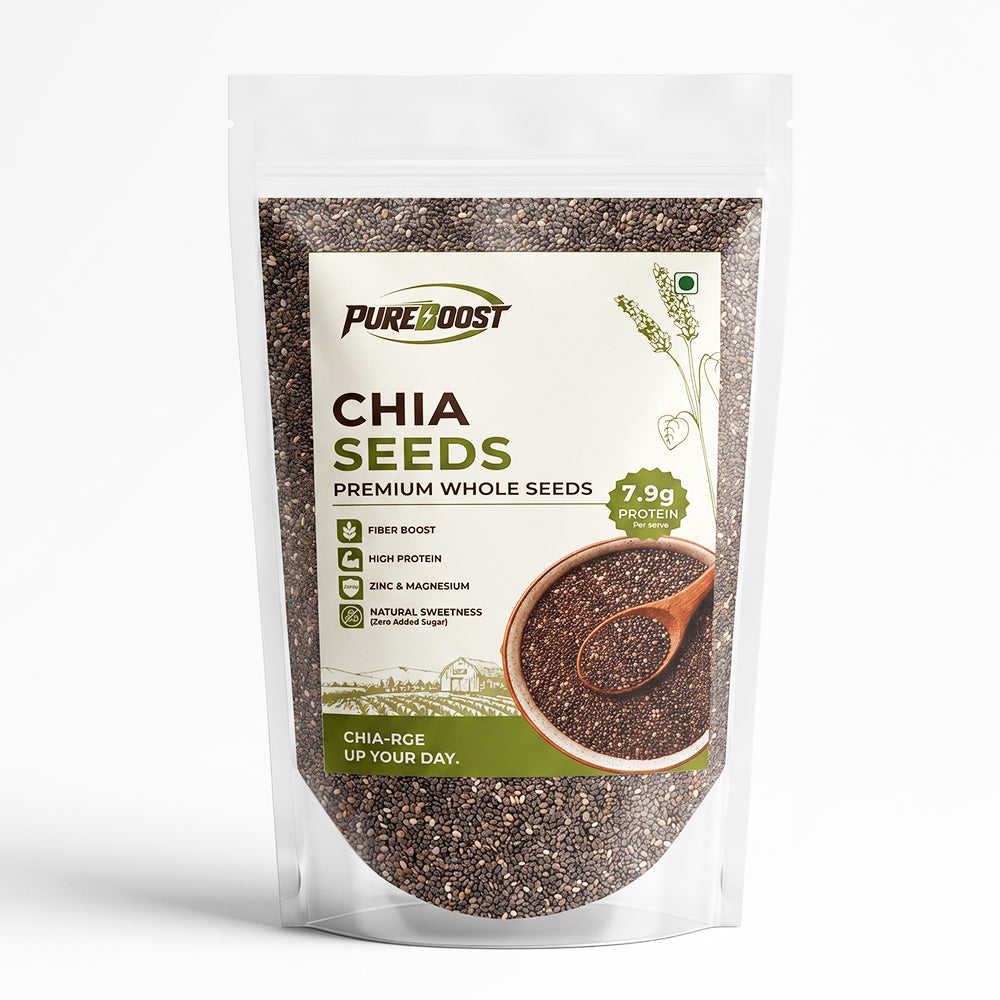
Chia seeds: fibre and hydration
Per 30 g: about 5 g protein, 10 g fibre, 5 g omega-3 (ALA). Chia absorbs about ten times its weight in water and turns into a gel. That gel is why a chia pudding keeps you full and why a spoon in your water bottle in summer helps with hydration. It has almost no flavour.
Use it: soaked overnight in milk with cocoa for a pudding, stirred into curd, in nimbu pani or a smoothie, as an egg substitute in baking (1 tbsp chia + 3 tbsp water).
Do not: eat a dry spoonful and then drink water. Soak it first.
Flax seeds (alsi): omega-3 and heart health
Per 30 g: about 5 g protein, 8 g fibre, 6 g omega-3. Flax is the richest common source of plant omega-3 and of lignans, which are linked to heart and hormone health. It must be ground. Whole flax seeds have a shell your gut cannot break, so they go in and come out unchanged. Grind a week's worth in a mixer and keep it in the fridge.
Use it: a tablespoon of ground flax in roti dough, oats, dal or chutney. Roasted alsi with a little salt is a classic winter snack in north India.
Pumpkin seeds: protein, magnesium and zinc
Per 30 g: about 9 g protein, 2 g fibre, and roughly 40% of your daily magnesium and 20% of your zinc. The best protein of the four and the one that works most like a snack. Magnesium matters for sleep and muscle recovery; zinc for immunity. Most Indian diets are short on both.
Use it: dry-toast and salt them for snacking, on salads and soups, in trail mix with roasted edamame, blended into pesto.
Sunflower seeds: vitamin E and good fats
Per 30 g: about 6 g protein, 3 g fibre, and nearly your full daily vitamin E. Mild, slightly nutty, cheap. Mostly unsaturated fat.
Use it: toasted on top of sabzi or salad, in granola, ground into a paste as a peanut-free spread, in laddoos.
Side by side, per 30 g
| Chia | Flax | Pumpkin | Sunflower | |
|---|---|---|---|---|
| Protein | 5 g | 5 g | 9 g | 6 g |
| Fibre | 10 g | 8 g | 2 g | 3 g |
| Omega-3 | High | Highest | Low | Low |
| Standout mineral | Calcium | Lignans | Magnesium, zinc | Vitamin E |
| Prep | Soak | Grind | Toast or raw | Toast or raw |
How much is enough
One to two tablespoons a day of any combination. Seeds are calorie-dense (150 to 170 calories per 30 g), so they are a sprinkle, not a bowl. Variety beats volume: a pumpkin-and-flax mix on your oats covers protein, minerals and omega-3 in one go.
Buying and storing
Buy raw, unsalted, and in sizes you will finish in two months, because the fats go rancid with heat and time. Keep them in an airtight jar away from the stove; ground flax goes in the fridge. Pureboost seeds are cleaned and stone-free, in 250 g jars and 500 g pouches.
The simple starter kit
If you buy two: pumpkin for protein and minerals, flax or chia for omega-3 and fibre. If you buy one: pumpkin, because it is the one you will actually snack on.