How Much Protein Do You Actually Need Per Day? A Simple Guide for Indians
Ask ten people how much protein they need and you will get ten guesses. The honest answer is simpler than the internet makes it sound, and most Indians are eating well below it. This guide gives you the number, shows you why dal and roti alone rarely get you there, and lays out a day of eating that does.
The number: start with your body weight
The Indian Council of Medical Research puts the recommended dietary allowance at about 0.8 g of protein per kilogram of body weight per day. That is the minimum to avoid deficiency for a sedentary adult, not an amount to aim for if you want to feel good, keep muscle as you age, or train.
A more useful range, backed by most sports nutrition bodies, is 1.2 to 2.0 g per kg depending on how active you are:
| Your situation | Daily protein | For a 70 kg adult |
|---|---|---|
| Desk job, little exercise | 0.8 to 1.0 g/kg | 56 to 70 g |
| Walks, yoga, light gym 2 to 3 times a week | 1.2 to 1.4 g/kg | 84 to 98 g |
| Strength training 4+ times a week | 1.6 to 2.0 g/kg | 112 to 140 g |
| Trying to lose fat while keeping muscle | 1.6 to 2.2 g/kg | 112 to 154 g |
| Over 60 | 1.0 to 1.2 g/kg | 70 to 84 g |
If you are overweight, use your goal weight rather than your current weight so the number does not run away from you.
Why the average Indian plate falls short
A typical vegetarian day of two rotis and sabzi for lunch, rice and dal for dinner, chai and biscuits in between, lands at roughly 35 to 45 g of protein. That is fine for avoiding deficiency on paper and nowhere near the 80 to 100 g most adults would do well on.
The reason is that our staples are carbohydrate-heavy. A katori of cooked dal has about 7 g of protein. Two rotis have about 6 g. A cup of cooked rice has about 4 g. The protein is there, but it is spread thin, and the volume of food you would need to reach 100 g from dal and roti alone is unrealistic.
What 90 g of protein looks like in a real day
You do not need to eat like a bodybuilder. You need one protein-first choice at each meal and a protein snack instead of a sugar snack.
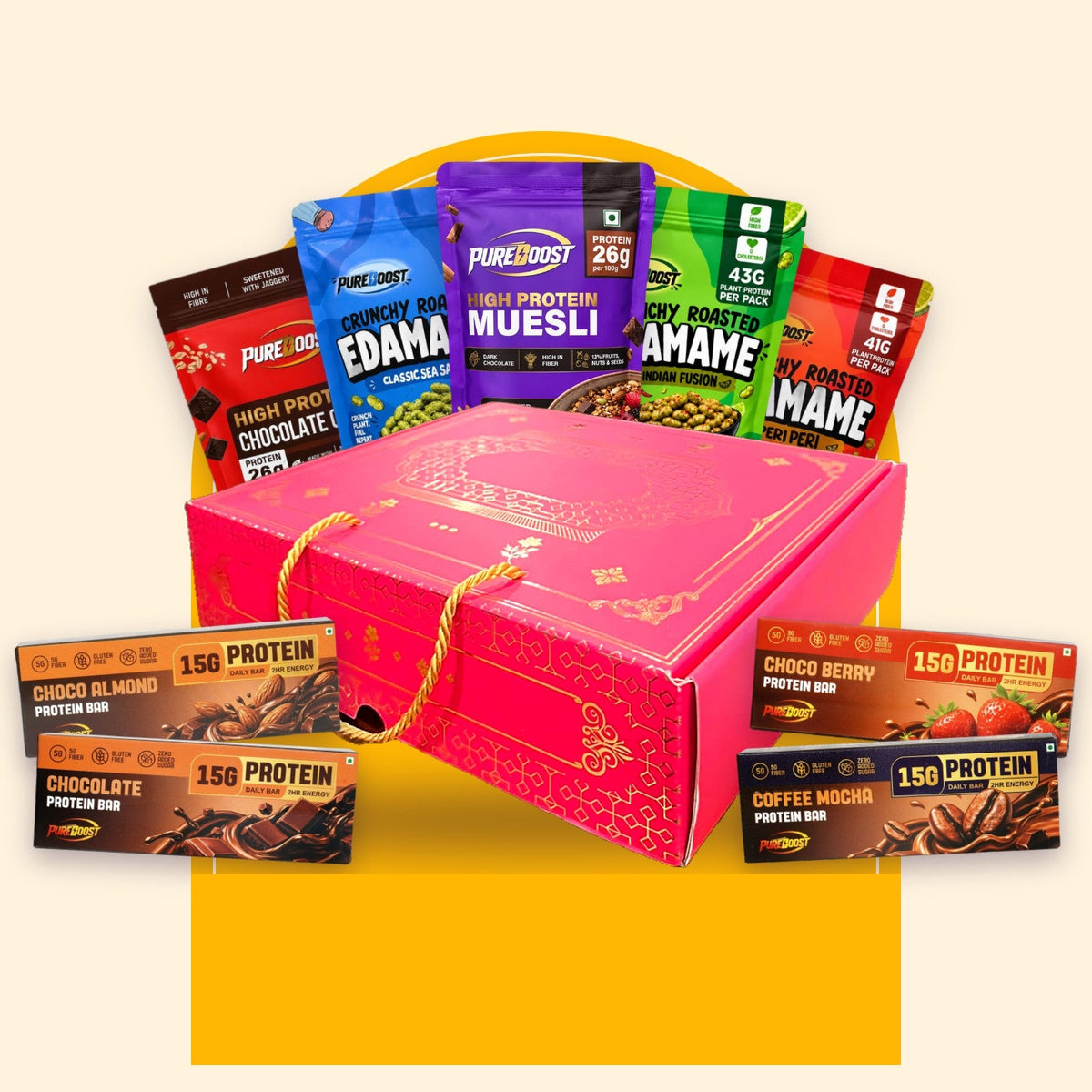
- Breakfast: a 75 g bowl of high protein chocolate oats with milk, about 24 g
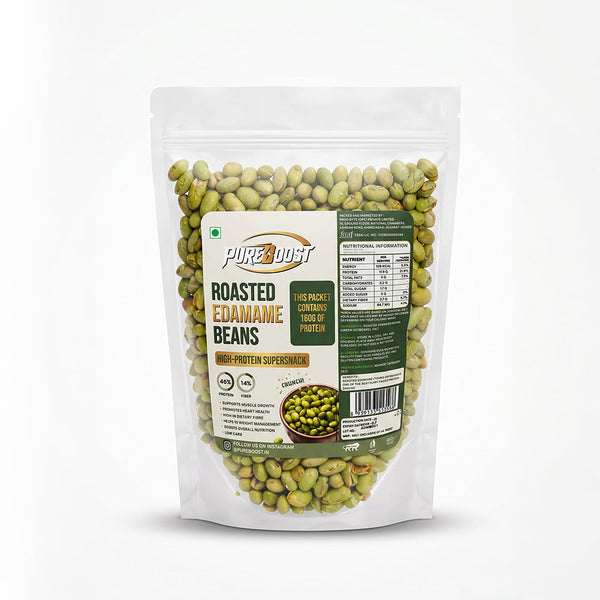
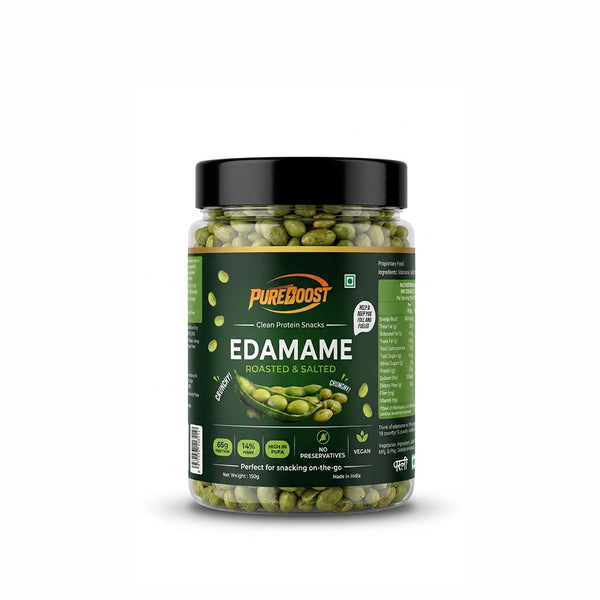
- Mid-morning: a 30 g handful of roasted edamame, about 14 g
- Lunch: rajma or chole with two rotis and a bowl of curd, about 20 g
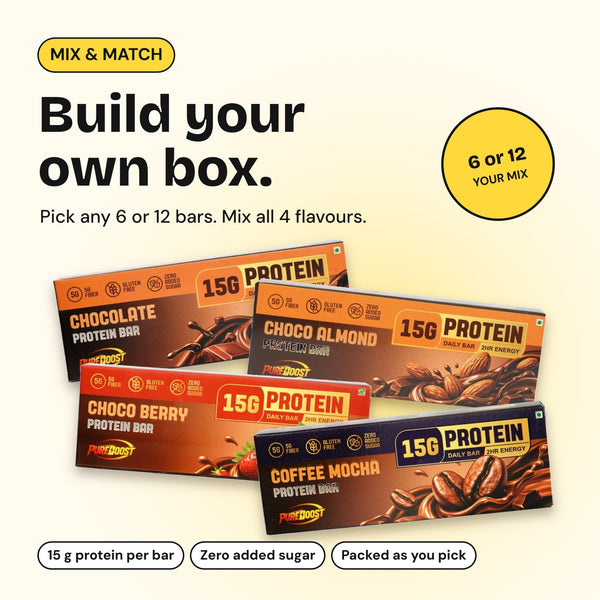
- Evening: one Pureboost protein bar, 15 g
- Dinner: paneer bhurji or a two-egg omelette with roti and salad, about 20 g
That is roughly 93 g, with no shake required. If you train hard and need to reach 120 g or more, that is where a scoop of whey protein (24 g) earns its place.
Spread it out, do not stack it
Your body uses protein best in portions of about 20 to 40 g at a time. Eating 10 g at breakfast and 60 g at dinner is less useful than 25 g at each of four sittings. This is the single biggest fix for most people: get protein into breakfast and into your snacks, where it is usually missing.
Quality matters, but less than quantity
Animal proteins, soy and whey are complete, meaning they have all nine essential amino acids in good amounts. Most plant proteins are low in one or two. The fix is variety, not worry: dal with rice, roasted edamame with your chai, seeds on your oats. Over a day, the gaps fill in.
Signs you are not getting enough
- You are hungry an hour after meals
- Hair fall or brittle nails without another explanation
- Slow recovery after exercise, or losing strength despite training
- Constant cravings for sweets and fried snacks
Can you eat too much?
For healthy adults with normal kidney function, intakes up to about 2 g per kg are well studied and safe. If you have a kidney condition, talk to your doctor before increasing protein. Drink enough water, and keep fibre in the picture.
The one change that moves the needle
If you change nothing else, change your snacks. Swapping two sugary or fried snacks a day for two protein snacks adds 25 to 30 g of protein and removes 30 to 40 g of sugar. It is the easiest win in Indian eating, and it is exactly why Pureboost makes snacks that carry real protein.