12 High-Protein Vegetarian Foods in India, With the Grams That Actually Count
Vegetarian and high protein is not a contradiction, but it does take a bit more planning than ordering a chicken breast. The trick is knowing which foods carry a lot of protein per serving, and which ones only sound like they do. Here are the ones worth building your day around, with numbers per realistic portion rather than per 100 g of something nobody eats 100 g of.
1. Soya chunks (nutri nuggets): about 26 g per 50 g dry
The heaviest hitter in the Indian vegetarian kitchen. Half a cup of dry soya chunks gives you more protein than two eggs, and it is a complete protein. Rinse well after soaking to lose the beany smell, then use in curry, pulao or a dry stir-fry.
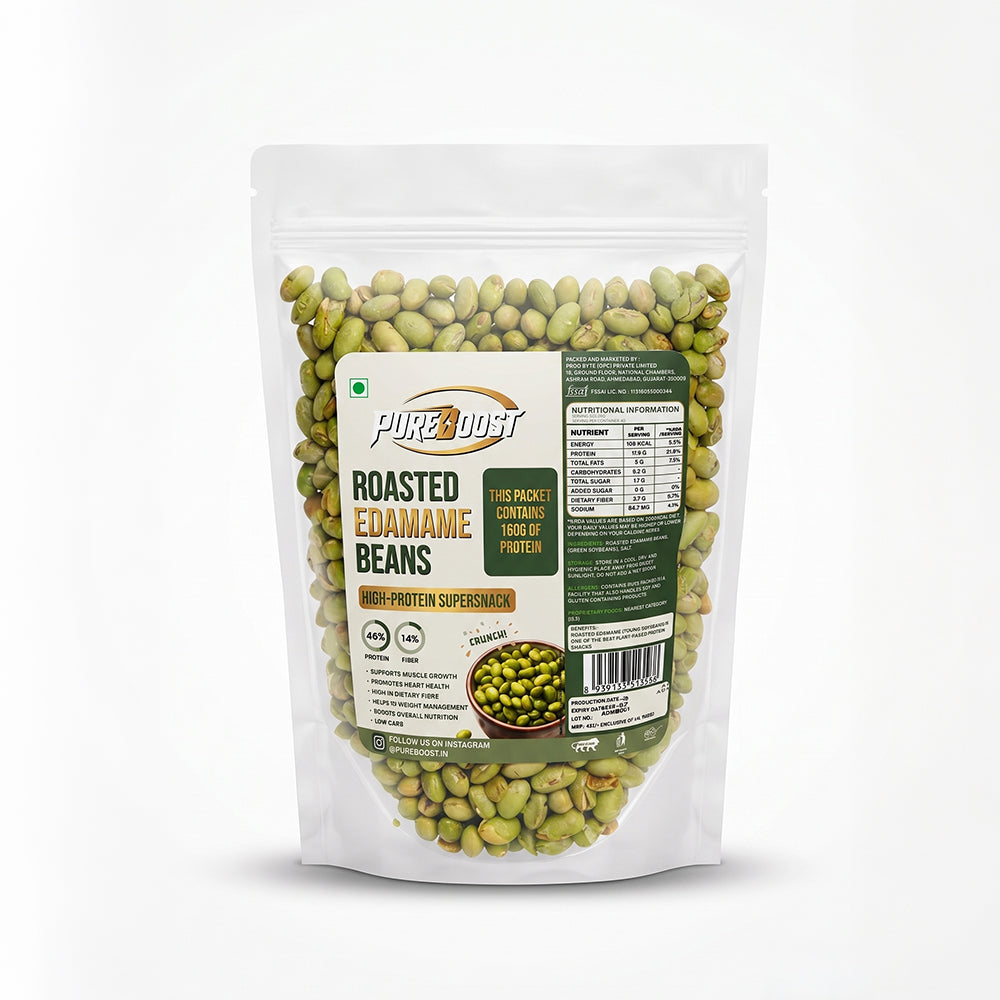
2. Roasted edamame: about 14 g per 30 g handful
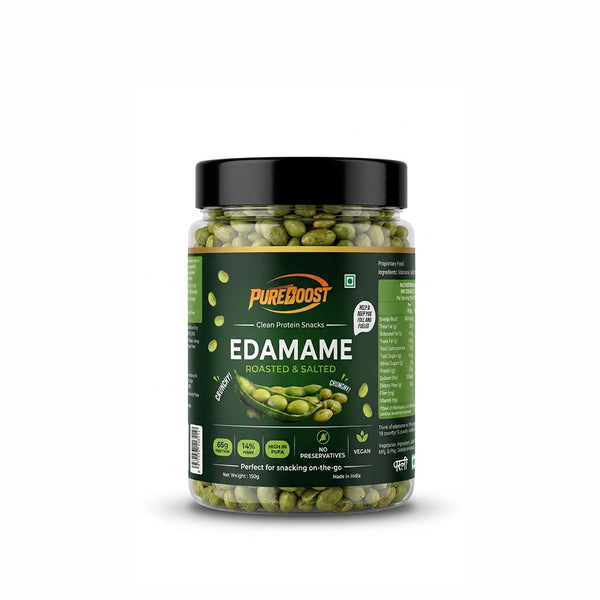
Edamame are young green soybeans. Roasted and lightly salted, they turn into a crunchy snack with 46 g of protein per 100 g and 14 g of fibre. That is more protein per gram than almonds, peanuts or chana, and nothing is fried. A 30 g handful with your evening chai is 14 g of plant protein. See Pureboost roasted edamame in sea salt, peri peri, cheesy garlic and Indian fusion.
3. Paneer: about 18 g per 100 g
Reliable, filling and easy to add to almost any meal. Paneer is also high in fat, so a 100 g portion is about 260 calories. Fine for most people, worth watching if you are cutting.
4. Greek yogurt or hung curd: about 10 g per 100 g
Strain regular dahi overnight in a muslin cloth and you roughly double its protein by weight. A 150 g bowl of hung curd with seeds on top is a 15 g breakfast or snack.
5. Tofu: about 8 to 15 g per 100 g
Firm tofu sits at the higher end, silken at the lower. Lower in fat than paneer and takes on any marinade. Press it between two plates for 15 minutes before cooking so it browns instead of steaming.
6. Rajma and chole: about 15 g per cooked cup
Both are good sources, and both come with 12 to 15 g of fibre per cup, which is why they keep you full for hours. Pair them with rice or roti and the amino acid profile completes itself.
7. Dals: about 7 to 9 g per katori
Moong, masoor, toor and urad all land in the same range per cooked katori. The problem is not quality, it is quantity: one katori is a side, not a protein source. Make it two katoris, or thicker, and it starts to matter.
8. Milk: about 8 g per 250 ml glass
Easy to forget. Two glasses a day is 16 g. Add a scoop of whey to one of them and that glass alone becomes 32 g.
9. Peanuts: about 7 g per 30 g
Cheap and everywhere. Also about 170 calories per handful, so they are a better fat source than a protein source. Treat them as a bonus, not the plan.
10. Pumpkin seeds: about 9 g per 30 g
The highest-protein common seed, with magnesium and zinc as a bonus. Toast them dry and keep a jar on the counter. Pureboost pumpkin seeds come in 250 g and 500 g.
11. Chia and flax: about 5 g per 30 g, plus omega-3
Not protein powerhouses, but they add up when you sprinkle them daily, and both bring fibre and omega-3 fats that most Indian diets lack.
12. High protein oats and muesli: about 19 g per 75 g bowl
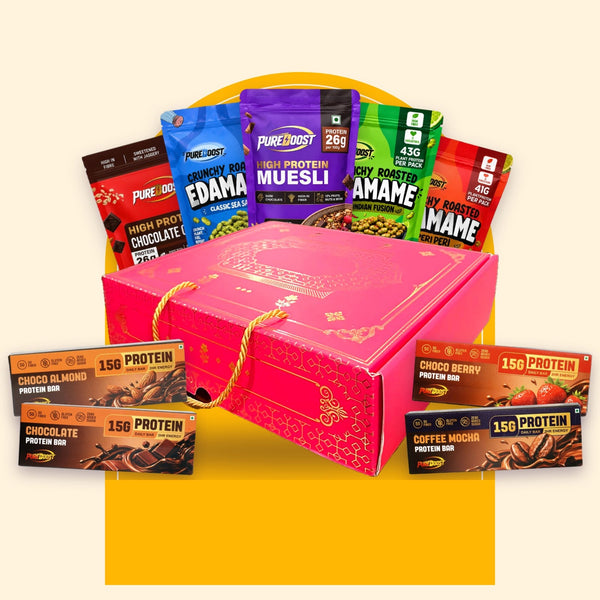
Regular oats have about 13 g per 100 g. Pureboost chocolate oats and muesli are 26 g per 100 g, because soy protein is mixed into the oats along with almonds, raisins and seeds. A 75 g bowl with 200 ml milk is a 26 g breakfast that takes one minute.
A vegetarian day that reaches 95 g
- Breakfast: high protein oats with milk, 26 g
- Mid-morning: a 30 g handful of roasted edamame, 14 g
- Lunch: rajma, two rotis, a bowl of curd, 22 g
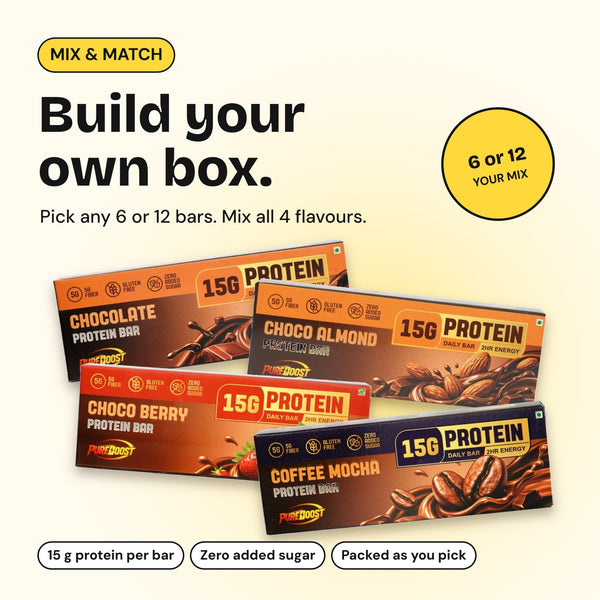
- Evening: a protein bar or a glass of milk, 15 g
- Dinner: paneer or tofu sabzi with roti and a dal, 20 g
Foods that sound high-protein but are not
Besan chilla (about 6 g each), sprouts (about 3 g per small bowl), quinoa (about 8 g per cooked cup) and most 'protein' biscuits and chips (2 to 5 g per serving) are fine foods, but they will not carry your protein target. Use them as sides and let soya, paneer, edamame, dals and dairy do the heavy lifting.