Protein Bar vs Whey Protein: Which One Do You Actually Need?
People ask us this every week, usually phrased as 'is a protein bar as good as a shake?' The answer is that they are not competing. A protein bar is a snack that carries protein. Whey is protein with the snack removed. Once you see it that way, the choice is easy.
The quick comparison
| Pureboost protein bar (50 g) | Pureboost whey (35 g scoop) | |
|---|---|---|
| Protein | 15 g | 24 g |
| Calories | About 167 | About 136 |
| Added sugar | 0 g | 0 g |
| Fibre | 5 g | Negligible |
| Preparation | None | Shaker and water or milk |
| Protein source | Whey, pea and soy blend | Whey isolate and concentrate |
| Best for | Replacing a snack, travel, office | Post-workout, hitting high targets |
When a protein bar is the right call
- You are replacing a worse snack. If 4 pm usually means biscuits, samosa or a chocolate, a 15 g bar with zero added sugar is a clear upgrade and the easiest habit to keep.
- You are travelling or at a desk. No shaker, no water, no washing up, no fridge.
- You want to feel full. The 5 g of fibre and the chewing matter. A shake disappears in ten seconds; a bar is a proper snack.
- Your target is moderate. If you need 70 to 90 g a day, a bar or two plus decent meals gets you there without powder.
When whey is the right call
- You train seriously and need 120 g or more. Getting there on food alone is hard; a scoop adds 24 g for 136 calories.
- You want fast absorption after a workout. Whey is digested quickly and is rich in leucine, which is what starts muscle repair.
- You are counting calories tightly. Whey gives the most protein for the fewest calories of anything you can buy.
- You like making it part of food. A scoop in oats, curd, a smoothie or pancake batter lifts the protein of a whole meal.
Cost per gram of protein
Whey wins on cost per gram, by a wide margin: a 1 kg pouch gives 28 scoops at 24 g each. A bar costs more per gram because you are paying for a finished, shelf-stable snack with chocolate, almonds and fibre in it. Both are cheaper per gram of protein than paneer or most packaged 'healthy' snacks.
The sugar question
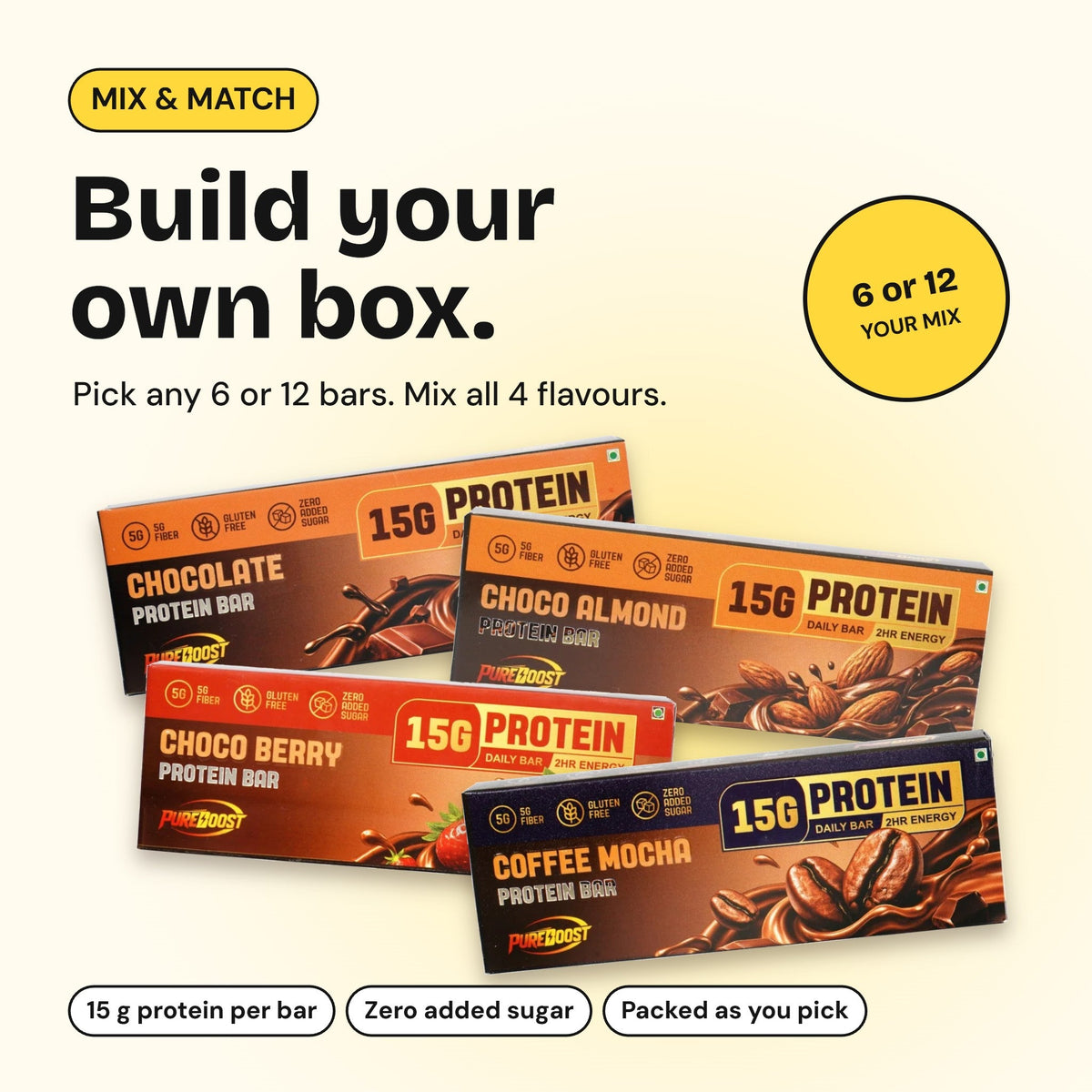
This is where most bars on the shelf lose. Many so-called protein bars carry 15 to 25 g of sugar, which makes them a chocolate bar with a protein sticker. Read the label: look for added sugar at zero and total sugar in single digits. Pureboost bars have 0 g added sugar and under 4 g total sugar per bar.
Can you use both?
Yes, and plenty of people do: whey after training, a bar in the afternoon. There is no interaction and no reason to pick one for life. Just do not double up on the same occasion; 39 g at once is more than most bodies use in one sitting.
Our honest recommendation
If you do not currently use either, start with the bar. It fixes the snack problem, which is where most Indian diets leak sugar and lose protein. If you are already eating well and training four or more times a week, add whey. And if you are not sure, the All in One box lets you try all four bar flavours before committing to a pouch of anything.