How to Read a Protein Bar Label (And Spot the Sugar Bombs)
The protein bar shelf is the most misleading shelf in the shop. Bars with 6 g of protein and 20 g of sugar sit next to bars with 20 g of protein and none, in near-identical wrappers, both shouting 'PROTEIN' in the same font. The back of the pack tells the truth. Here is how to read it in ten seconds.
The five numbers
1. Protein per bar: 10 g minimum, 15 g is good
Not per 100 g. Per bar. Brands love to quote per 100 g because it makes a 35 g bar look twice as strong. If a bar is under 10 g, it is a snack bar, not a protein bar.
2. Protein-to-calorie ratio: about 1 g per 12 calories or better
Divide calories by grams of protein. A 167-calorie bar with 15 g protein is 1 g per 11 calories, which is solid. A 250-calorie bar with 10 g is 1 g per 25 calories, which is a chocolate bar with a little protein in it.
3. Added sugar: zero, or close to it
Indian labels now have to show added sugar separately. Look for 0 g. Total sugar under 5 g is fine; a little comes from the dates, fruit or milk solids. Anything over 10 g total sugar and you are eating dessert.
4. Fibre: 3 g or more
Fibre is what makes a bar feel like food rather than a sweet. 5 g is excellent.
5. Saturated fat: under 5 g
Chocolate coating adds some; that is fine. Bars loaded with palm oil and hydrogenated fat push this past 8 g.
The first three ingredients
Ingredients are listed by weight, so the first three tell you what the bar mostly is. You want a protein source in the first two: whey, soy protein, pea protein, milk protein. If the first ingredient is sugar, glucose syrup, dates, oats or chocolate, protein is a minority ingredient regardless of what the front says.
Words that mean sugar
Glucose syrup, invert syrup, maltodextrin, fructose, corn syrup, brown rice syrup, honey, jaggery, date paste, dextrose, cane juice. None are poison; all are sugar. If three of them appear, the 'no refined sugar' claim is doing a lot of work.
Sugar alcohols and fibre syrups
Zero-sugar bars usually use maltitol, erythritol or a soluble fibre syrup for sweetness. These are safe and widely used; some people get bloating from large amounts of maltitol, so if a bar upsets your stomach, that is the likely reason. Pureboost bars use maltitol in modest amounts with sugar-free dark chocolate.
Three bars, scored
| Bar A ('Protein Crunch') | Bar B ('Energy Protein') | Pureboost Chocolate | |
|---|---|---|---|
| Protein | 7 g | 12 g | 15 g |
| Calories | 210 | 240 | 167 |
| Cal per g protein | 30 | 20 | 11 |
| Added sugar | 14 g | 9 g | 0 g |
| Fibre | 1 g | 3 g | 5 g |
| Verdict | Chocolate bar | Decent snack | Protein bar |
Bars A and B are composites of typical products on the shelf, not specific brands.
The ten-second routine
Flip the bar. Protein over 10? Calories divided by protein under 15? Added sugar zero? Protein in the first two ingredients? If all four pass, buy it. If two fail, it is a treat, and you should eat it as one.
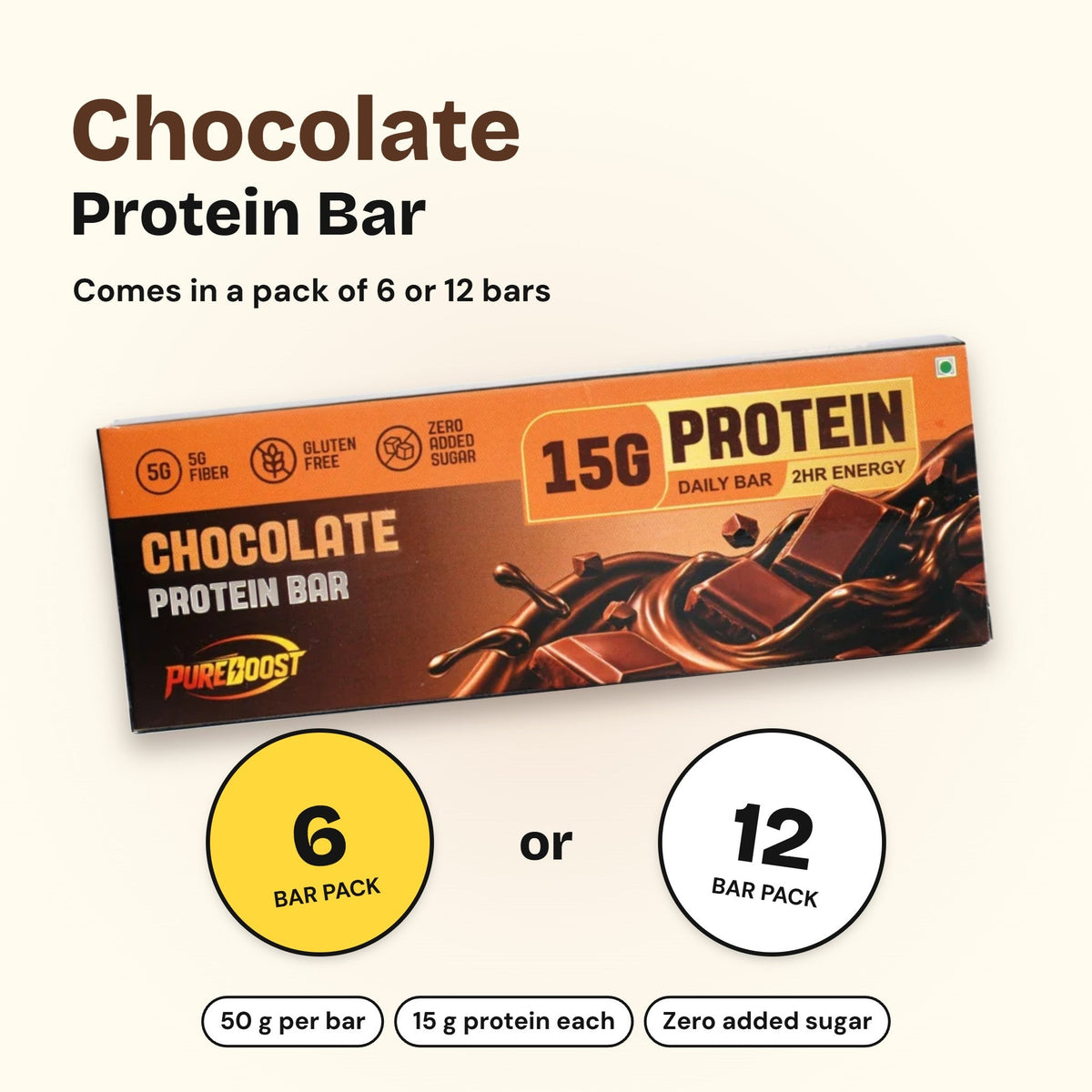
Pureboost bars: 15 g protein, 5 g fibre, 0 g added sugar, about 167 calories, gluten free. The full table is on every pack and on the protein bar page.