Is Soy Bad for You? What the Evidence Says About Edamame, Tofu and Soy Protein
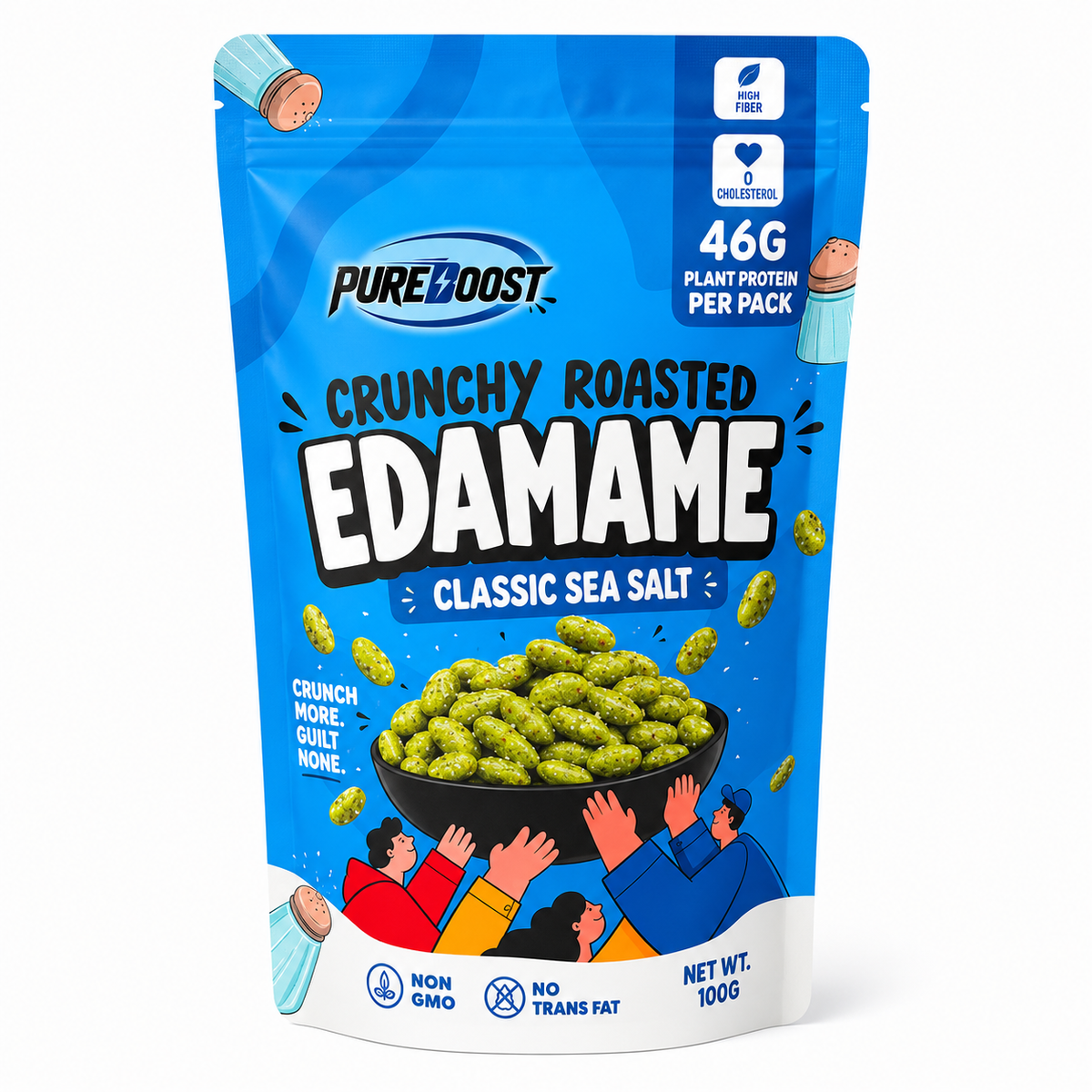
Soy is one of the best plant proteins there is, and also one of the most argued about. Because edamame is soy, and because soy protein is what makes our oats and muesli high in protein, we get asked about this a lot. Here is an honest summary of what the research shows.
The hormone question
Soy contains isoflavones, plant compounds that are structurally similar to oestrogen and can bind weakly to the same receptors. That is the origin of nearly every soy fear. The important word is weakly: isoflavones are hundreds to thousands of times less potent than human oestrogen, and in many tissues they act as blockers rather than activators.
Does soy lower testosterone in men?
No. A 2021 meta-analysis of 41 clinical studies found no effect of soy foods or isoflavones on testosterone, oestrogen or sperm quality in men, at any intake tested. The handful of alarming case reports involved men consuming extreme amounts (several litres of soy milk a day) and resolved when they stopped. A handful of edamame or a bowl of protein oats is nowhere near that.
Soy and breast cancer
This fear ran the other way from the evidence. Large studies in Asian populations, where soy is eaten daily from childhood, show that women who eat more soy have a modestly lower risk of breast cancer. The American Cancer Society and the American Institute for Cancer Research both consider soy foods safe, including for breast cancer survivors. The concern came from early rodent studies using isolated isoflavones at doses no diet provides.
Soy and thyroid
Soy does not cause thyroid problems in people with normal thyroid function and adequate iodine. If you take levothyroxine for hypothyroidism, soy (like calcium, coffee and fibre) can reduce absorption of the medication if eaten at the same time. The fix is to take the tablet on an empty stomach and eat soy a few hours later, not to avoid soy.
Is soy a complete protein?
Yes. Soy is one of the very few plant proteins with all nine essential amino acids in good proportions, with a protein quality score close to milk and egg. That is why it is the backbone of vegetarian protein in most of the world and why we use it in the oats and muesli: it lifts them from 13 g to 26 g of protein per 100 g without changing how they eat.
What about GMO and processing?
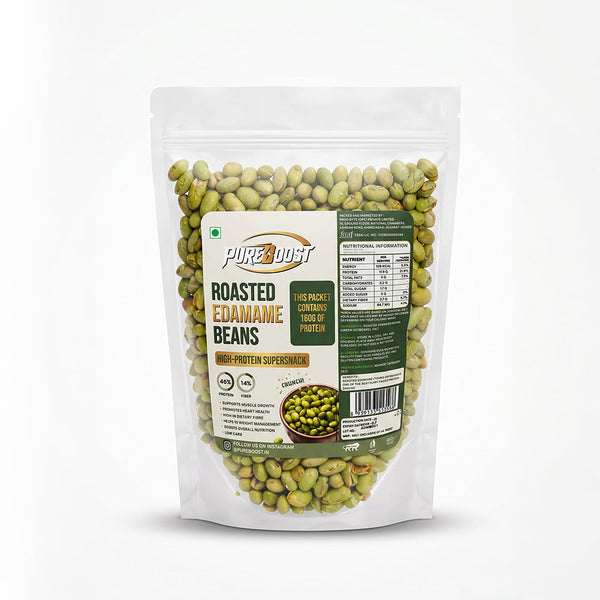
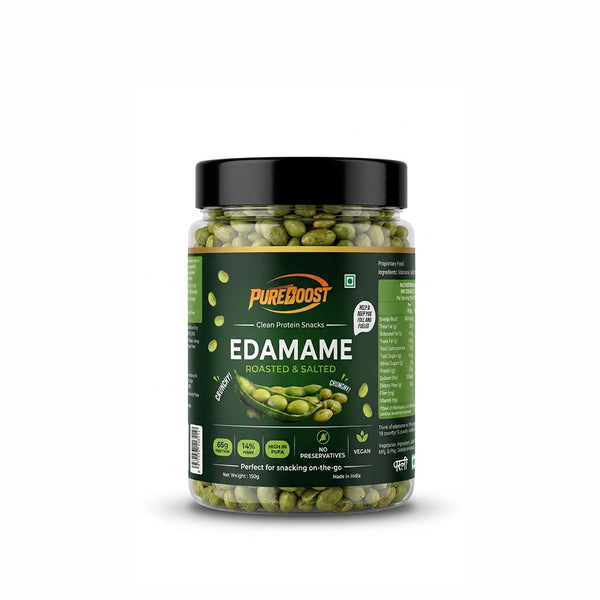
Edamame is a whole food: young green soybeans, roasted. Pureboost edamame is non-GMO. Soy protein isolate, used in the oats, muesli and bars, is more processed in the sense that the protein has been separated from the fat and carbohydrate, the same way whey is separated from milk. Neither process adds anything harmful.
Who should actually avoid soy
- People with a diagnosed soy allergy. This is real, though far less common than milk, egg or peanut allergy.
- Anyone whose doctor has specifically advised it for a medical reason.
How much is sensible
The research on benefit and safety mostly covers one to three servings a day: a serving being a handful of edamame, a cup of soy milk, 100 g of tofu or a bowl of soy-fortified cereal. That is a comfortable range and more than most Indians eat. As with any food, the problem is monotony, not soy itself. Eat it alongside dal, dairy, eggs and seeds and you get the benefits without relying on it.
The short version
Soy in normal food amounts does not affect hormones, does not harm men, does not cause breast cancer, and does not damage a healthy thyroid. It is a complete plant protein and one of the few that is cheap, shelf-stable and tastes good roasted. The fear is older than the evidence, and the evidence is in.
General information, not medical advice. If you have a thyroid condition or hormone-sensitive cancer, follow your doctor's guidance.